JUN 15, 2026Supporting Local Craftsman: Building a Traditional Stone Wall at "HINOKI STAYS - Tea House" at Shimanami Kaido
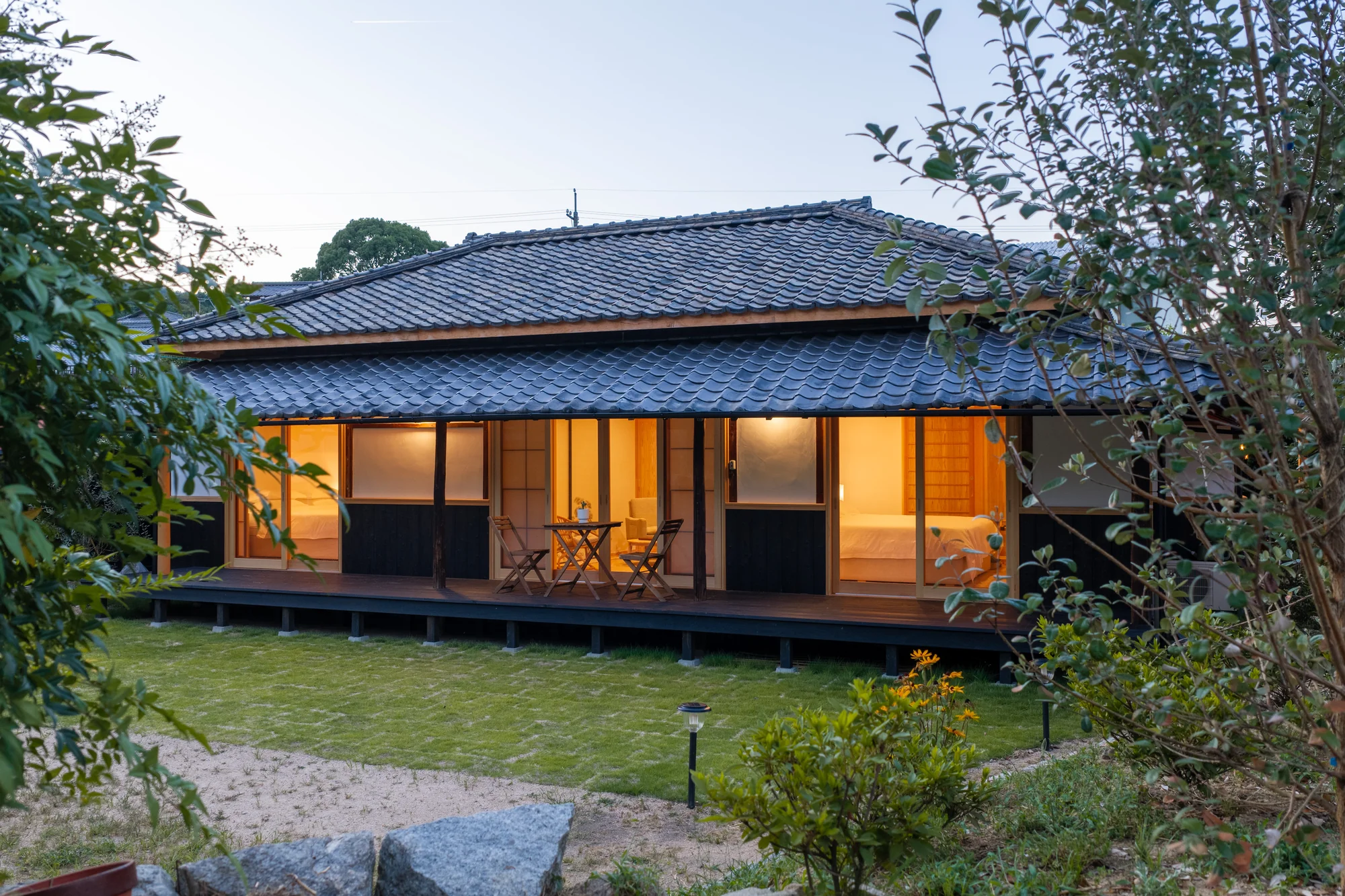
※日本語の文章は英語の後にあります。 The first kominka (traditional Japanese house) rejuvenation project by AKIYA2.0, "HINOKI STAYS - Tea House," was recently completed and now we are working on landscaping. Our first project has been to retain the slope along the front entrance of the house, as over the years the embankment has eroded and collapsed. We asked Mr Harukiyo Kan, a well-known stone mason in Omishima, to make a low stone retaining wall. In recent years, many people seem to prefer Western-style stone walls, but we chose a traditional Japanese stone wall technique called "Nozura-zumi" (rubble masonry), which has long been used for Japanese castles, shrines, and temples. Since mortar is used for the backfilling this time, it is classified as "Neri-zumi" (mortar-embedded stacking). The materials used are all natural stones from Omishima. Mr Yuji and Reiji Yasaki from Yasaki Kogyo, who helped us rebuild the house, collected them for us. Natural stones vary in size, shape, and color. Therefore, selecting stones that match the final concept in the stone mason's mind is one of the crucial steps in creating a successful and artistic wall. Supporting that stone selection is Harukiyo-san's colleague, Mr Akira Fujiwara. Working together, Akira-san finds the stones that Harukiyo-san has in mind, and the two of them stack them up one by one as a collaborative team. A stone wall directly reflects the craftsman's experience and their style and character. Harukiyo-san envisioned a rustic form, Nozura-zumi, and stacked both the curved and straight sections without stones protruding outside a general reference line. Shaping stones while retaining a natural looking surface and yet following a planned outline is a skill acquired by a lifetime of experience. Typically for a project like this, there are no standard products or manuals. Passing on these traditional techniques to the next generation has become a major challenge within the stone masonry sector. With the decline of Japanese-style architecture in general, opportunities to build stone walls for private homes are decreasing, and the quarries where one can develop an eye for choosing the right stones are also dwindling. Additionally, the shortage of younger generations to inherit these skills in rural areas is a serious issue. Of course these challenges are not just limited to stone masonry and extend right across the crafted building industry in Japan. Through the renovation of kominka like the Tea House in Omishima, AKIYA2.0 hopes to preserve and revive these beautiful traditional techniques. 最近完成したAKIYA2.0初の古民家再生プロジェクト「HINOKI STAYS – Tea House」。現在は外構や庭づくりを進めています。その一環として、玄関前アプローチの崖の一部が崩れていたため、その修復と土留めを兼ねて大三島を代表する石工職人・菅 春清さんに石垣づくりをお願いしました。 近年は西洋風の石垣を好まれる方も多いそうですが、私たちは日本の伝統的な石垣を選びました。春清さんが選んだのは、日本の城や神社仏閣にも用いられてきた「野面積み(のづらづみ)」。今回は裏込めにセメントを使用しているため、「練積み(ねりづみ)」に分類されます。 材料となるのは、すべて大三島の自然石。家の再生を手掛けてくれている八崎興業の八崎勇二さんと礼二さんが集めてくださいました。自然石は一つひとつ大きさも形も色合いも異なります。そのため、春清さんが頭の中に描く完成形に合う石を選ぶことが、石積みの重要な工程のひとつです。 その石選びを支えるのが藤原 明さん。春清さんが思い描く石を明さんが探し出し、二人で相談しながら一つずつ積み上げていきます。 石垣には、職人の経験や感性がそのまま表れます。春清さんは施工前から完成形を頭の中で描いており、曲線部分も直線部分も、一般的な基準糸を張ることなく積み上げていきます。規格品もマニュアルもない、経験を積んだ職人だからこそできる技です。 こうした伝統技術を次世代へどう継承していくかは大きな課題となっています。和風建築の減少に伴い、個人住宅で石垣を築く機会は少なくなり、石を見る目を養う場も減っています。また、地方では技術を受け継ぐ若い世代の不足も深刻です。 この問題は石積みに限らず、日本の多くの伝統技術に共通する課題かもしれません。 AKIYA2.0は古民家再生を通じて、こうした美しい伝統技術と職人の仕事が未来へ受け継がれていくことを応援しています。